If you run a business that generates scrap metal every week, you'll know how quickly a tiny heap can become an issue. Old components pile up and take up floor space, and at some point, someone should arrange to have them removed. This can be much more manageable by selecting suitable scrap metal bins. The key is selecting the right bin for your practice's tonnage, metal content, and removal frequency. If a bin is too small, it will fill up too easily; if it's too large, it can take up space your team needs for daily work.
A Real Life Customer Story: When a Workshop Outgrew Its Bin
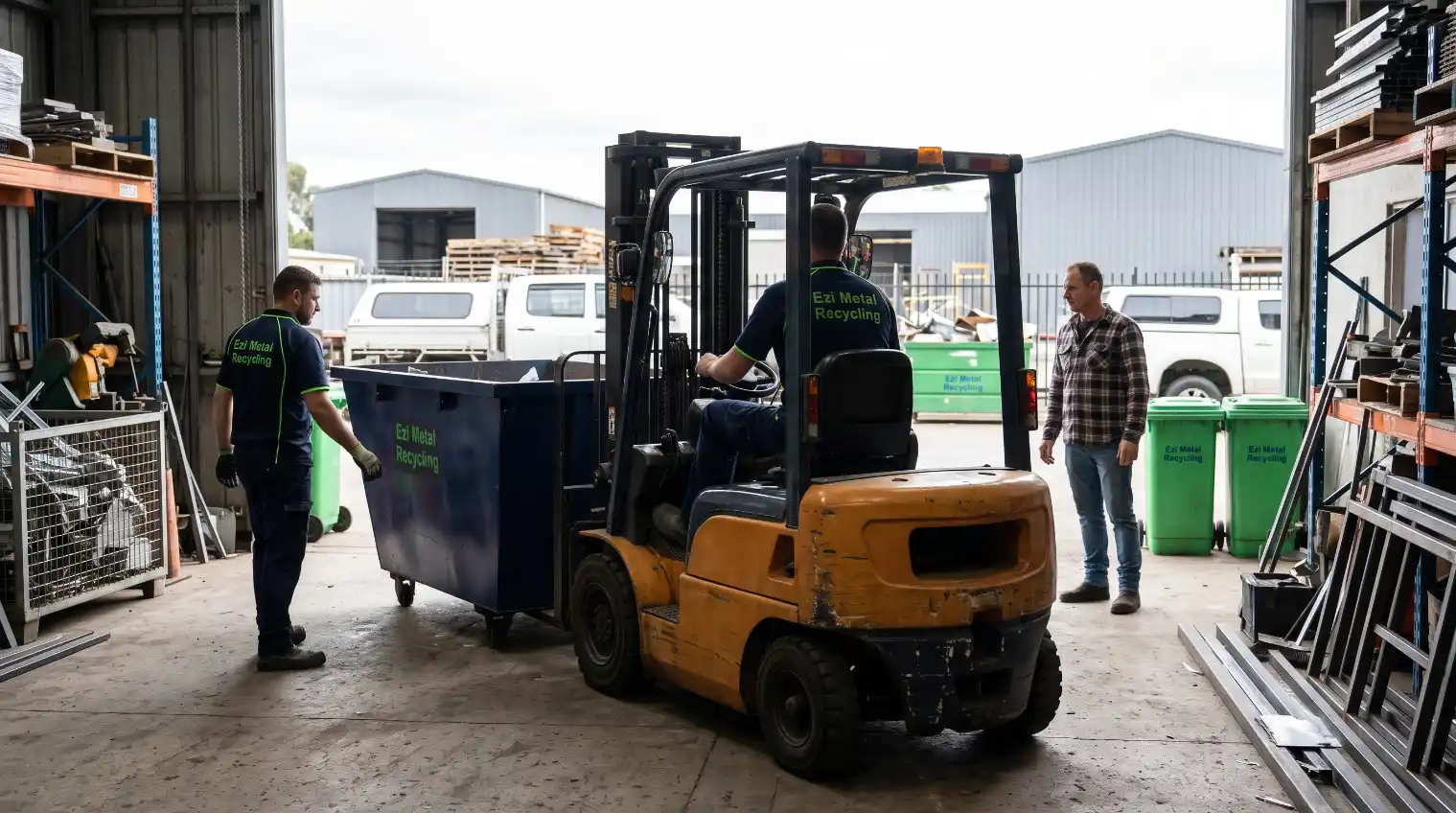
A metal firm in Melbourne that started with an initial scrap heap. The first uses of the workshop offcuts are okay. A few months later, the business starts taking on bigger projects, and the bin fills faster and faster. Other workers begin piling additional loads beside it, and the loading area becomes cluttered. The owner realizes the original mode of arrangement is no longer appropriate for the business. The owner reviews the workshop's weekly output and talks to the owner of the recycling company about the need for greater capacity and for recycling to happen at a different time. The new setup will make it easier for staff to cut offcuts and will limit movement of free scrap material.
How Do You Choose the Right Scrap Metal Bin Size?
First, consider how much scrap that business generates in an average work week. A small fabrication shop that makes occasional metal offcuts will have different needs than a manufacturing shop that continuously generates metal scraps each shift. The type of metal also matters. Heavy steel components can take up a lot of space in the bin without filling it, but lightweight aluminum off-cut materials can take up a lot of space. So choosing bin volume alone can be inadequate. Consider your loading area, vehicle access, and the workspace required to ensure staff move materials safely. The bin should be big enough for your normal production and yet not block walkways, loading bays or equipment.
Understanding Different Scrap Metal Bin Sizes
No single bin size fits every business. The above should be considered a general guide, and available capacities and sizes will differ from provider to provider. For companies with smaller scrap sources like maintenance shops or small fabrication programs, smaller bins might be an appropriate option. For frequent production offcuts, medium capacity may be sufficient; larger bins may be better for busy manufacturing operations and large metal clean-outs. The key is to balance the amount of material with its bulkiness and weight. Before ordering, talk about their production, how fast it accumulates, and the type of scrap the customer is likely to have: bulk sheets, long lengths, compact parts, or heavy steel.
Which Businesses Need Industrial Scrap Metal Bins?
Manufacturers, engineering workshops, metal fabricators, construction companies, and even auto enterprises can make use of industrial scrap metal bins. Scrap is often created as part of these businesses' daily operations, not just during infrequent cleanups. A fabrication shop's primary concern may be getting a consistent stream of steel offcuts. Examples of automotive activities that might generate metal clatters include auto repair shops and manufacturing facilities that create a variety of metal scraps across multiple locations. Keeping scrap materials in a specific area makes it easier for employees to categorize them and helps keep work areas cleaner. Similarly, larger operations can use metal types to separate bins, as required by the provider, for easier collection and recycling.
How Often Should Your Scrap Metal Bin Be Emptied?
The best collection schedule depends on the bin's fill rate, the weight of material to collect, and available storage. Some companies require regular collection, while others collect as bins near their maximum loadable capacity. You don't need this added strain if you leave a bin to the very brink. Scrap can end up on the floor, obstruct vehicles, or be difficult to manage safely. Alternatively, frequent collections may increase transport costs when the bin isn't full. Keep an eye on your bin for a couple of weeks and observe how quickly the contents build up. This will give you an accurate sense of your needs and help you develop a scrap metal collection timeline with your recycling center.
Signs Your Bin Needs Collection
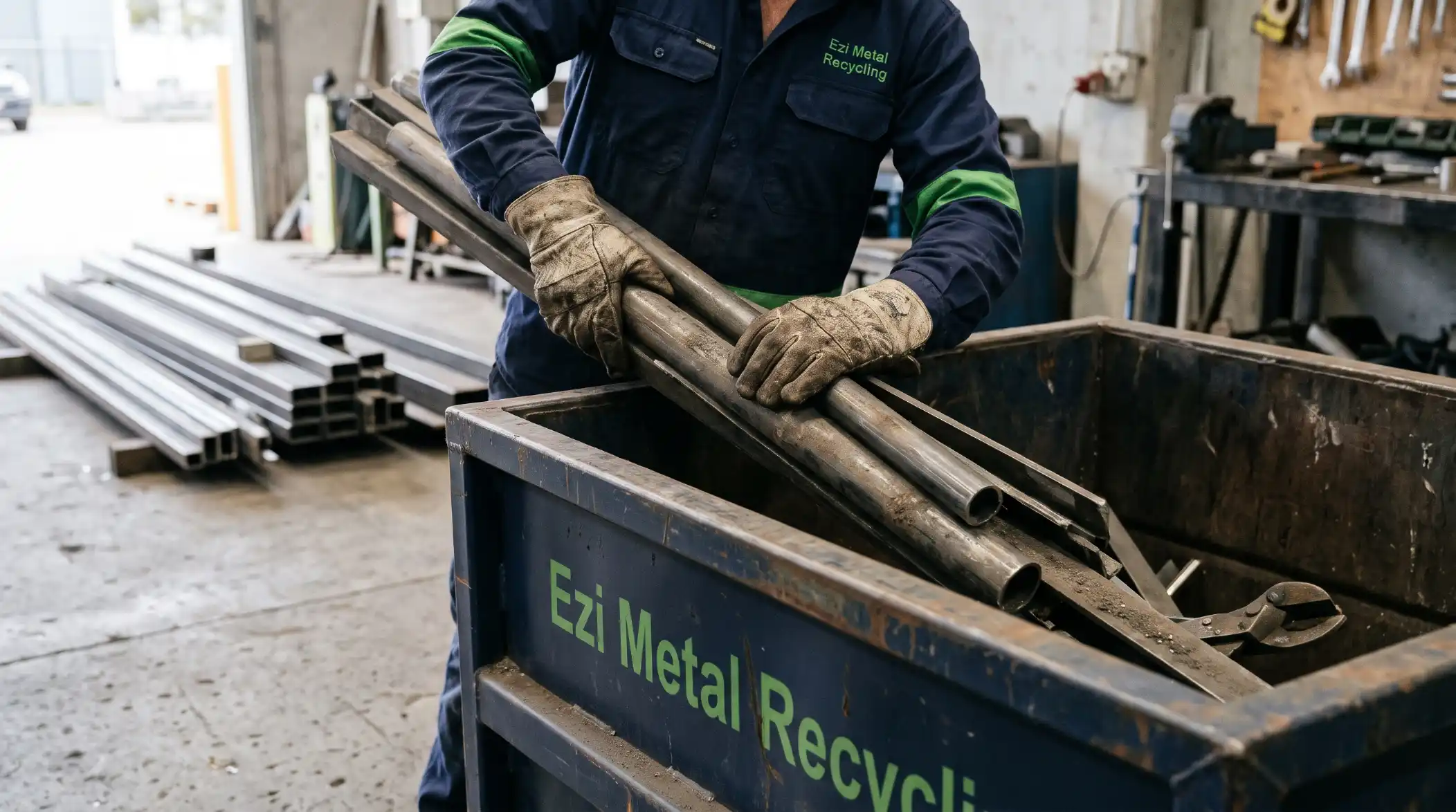
You don't need to fill up a bin to the brim before arranging for collection. The weight, form, and location of the material may matter as much as the available space.
Keep an eye out for these warning signs:
- The filling limit for Scrap is approaching.
- Very heavy steel objects are building up rapidly.
- Long/awkward offcuts are getting harder to place safely.
- Staff are leaving equipment near the bin because there is no space.
- Walkability and/or vehicle access is being hindered by removal of scrap.
- Production is up, and collection times are not being maintained.
Please do not exceed full loads of bins nor leave sharp metal objects protruding from bins in an unsafe manner. Follow the provider's loading instructions & plan a loading time change if the load will be unsafe.
What a Commercial Scrap Metal Recycling Can Improve Your Workflow
Commercial scrap metal recycling is more than just moving unwanted material, which is why it's important to do it effectively. With a well-planned setup, recycling areas can be organized, making it easier to distinguish between metals to be recycled. If staff are familiar with where the various materials are located, the time spent sorting through mixed heaps of materials is reduced. Clear loading procedures also minimize the risk of leaving surplus scrap in inappropriate and/or unsafe locations. Investigate the contract whenever you need to improve the process or add extra equipment. A bin that worked well this past season may not be needed for this season's workload.
Checklist Before Ordering a Scrap Metal Bin
Before choosing a bin, or altering collection times, consider the following:
- Try to determine how much scrap material your company does each week.
- Recognize key metals and if they are bulky or heavy.
- Optimize space for bins and pickup vehicles.
- Determine if individual bins would be useful for the sorting of metals.
- Discuss collection dates for the existing bins.
- Inquire about collection, what's accepted, and loading size.
- Review setup when production quantities/levels fluctuate.
Make sure you consult with your recycling company about the following, so it meets your site requirements and workflow.
Final Takeaway
Choose a scrap metal bin that fits your business now and won't make operations harder in the future. Weigh and measure your scrap, monitor how quickly the bin fills, and organize collection to avoid f storage problems. Your business can maintain orderly working areas and streamline scrap management with the proper accommodations and a convenient collection schedule.
What size scrap metal bin does a small business need?
It depends on the number of articles to be scraped, the weight, and the type of scrap. A business with occasional offcuts will likely need a smaller option than one that produces daily workshop waste.
How do I know when my scrap metal bin is full?
Resources in play must follow the providers' fill and loading limits. Collecting before the bin is unsafe, hard to load, or disrupting operations.
Can I put different metals in the same bin?
It depends on the materials and the recycler's needs. Consider separating the aluminum, copper, and steel loads.
Can collection frequency be changed as my business grows?
Inspecting and reviewing output collection arrangements is often possible as output is changing. Talk to your provider about how much you produce and their storage capacity.